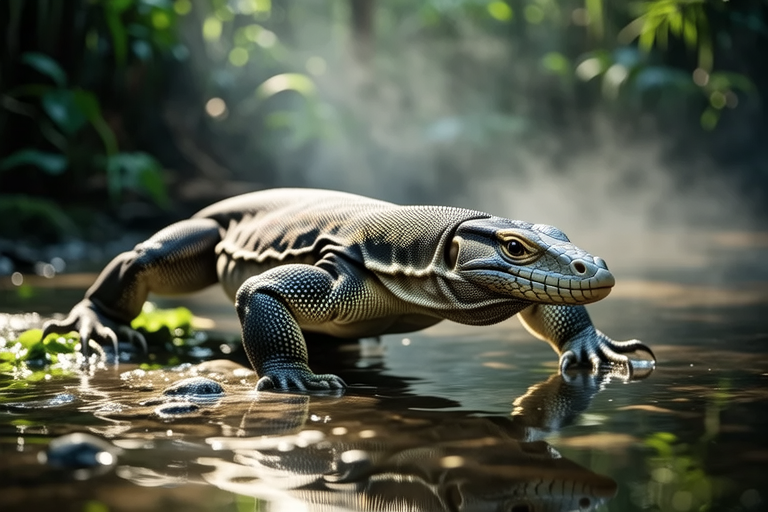
Aquatic Marvels: Discover the Thrilling World of Water Monitors
Welcome to the fascinating world of water monitors (Varanus salvator), a species that truly embodies the marvels of nature. These remarkable reptiles are not only the largest lizards native to Asia but also some of the most versatile creatures in the animal kingdom. With their sleek bodies and powerful limbs, water monitors have adapted perfectly to thrive both in and out of the water. This article will guide you through the unique adaptations, physical characteristics, habitat, diet, behavior, and conservation status of these impressive animals. Additionally, we’ll provide valuable insights for those interested in owning a water monitor as a pet.
Unique Adaptations for Aquatic Life
Water monitors have evolved several extraordinary adaptations that enable them to excel in aquatic environments. Their streamlined bodies, muscular tails, and webbed feet make them adept swimmers. The tail acts as a powerful rudder, propelling the monitor through the water with ease. Their nostrils are positioned high on their snouts, allowing them to breathe while partially submerged. Moreover, their skin is highly flexible, enabling them to squeeze into tight spaces and navigate through underwater crevices. These adaptations highlight the water monitor’s ability to thrive in diverse aquatic habitats.
Physical Characteristics
Water monitors are known for their impressive size, making them one of the largest lizard species in the world. Adult males can reach lengths of up to 3 meters (9.8 feet) and weigh around 20 kilograms (44 pounds). Females are generally smaller, measuring between 1.5 to 2 meters (4.9 to 6.6 feet) in length. Their bodies are covered in rough scales that protect them from predators and aid in camouflage. Water monitors possess strong claws that assist in climbing and digging. Their keen eyesight, sharp sense of smell, and excellent hearing make them formidable hunters.
Habitat and Distribution
Water monitors are found throughout Southeast Asia, including countries like India, Sri Lanka, Bangladesh, Myanmar, Thailand, Cambodia, Laos, Vietnam, Malaysia, Indonesia, and the Philippines. They inhabit a wide range of environments, from coastal mangroves and rivers to freshwater lakes and rice paddies. These adaptable creatures can be found in tropical forests, grasslands, and even urban areas where human settlements encroach upon their natural habitats. Water monitors prefer areas with abundant vegetation and plenty of hiding spots, which provide shelter and protection.
Diet and Hunting Techniques
Water monitors are opportunistic omnivores with a varied diet that includes fish, amphibians, small mammals, birds, eggs, insects, and carrion. They employ several hunting techniques depending on the prey and environment. In the water, they use stealth and patience to ambush unsuspecting fish or amphibians. On land, they actively pursue prey, using their speed and agility to catch rodents or other small animals. Their powerful jaws and sharp teeth allow them to crush shells and bones, enabling them to consume eggs and hard-shelled prey. Water monitors are also known to scavenge, feeding on dead animals when the opportunity arises.
Behavior: In and Out of the Water
Water monitors are equally at home on land and in the water. On land, they are agile climbers, capable of scaling trees and rocks with ease. Their long tails provide balance and support during these vertical movements. Water monitors are also skilled diggers, creating burrows for shelter and nesting purposes. When swimming, they move gracefully through the water, using their powerful tails to propel themselves forward. They can remain submerged for extended periods, occasionally surfacing to breathe. Water monitors are social animals, often seen basking together in groups or interacting with each other. However, they can become territorial when defending their territory or mates.
Interesting Facts About Size, Speed, and Hunting Techniques
Water monitors are among the fastest lizards, capable of reaching speeds of up to 18 miles per hour (29 kilometers per hour) on land. This incredible speed allows them to chase down prey and escape from predators. In the water, they are equally swift, using their powerful limbs and tail to swim rapidly. One of the most intriguing aspects of water monitors is their ability to detect prey using their Jacobson’s organ, a specialized sensory organ located in the roof of their mouth. This organ helps them identify chemical signals in the air and water, guiding them to potential food sources. Additionally, water monitors have been observed using tools, such as breaking open turtle shells with rocks, demonstrating their intelligence and problem-solving abilities.
Conservation Status and Threats
Despite their adaptability and widespread distribution, water monitors face numerous threats in the wild. Habitat destruction due to deforestation, agricultural expansion, and urbanization has significantly reduced their natural habitats. Pollution and overfishing in rivers and coastal areas have also impacted their aquatic environments. Water monitors are often hunted for their meat, skin, and traditional medicine, further contributing to population declines. In some regions, they are considered pests and are killed by farmers protecting their crops. As a result, the International Union for Conservation of Nature (IUCN) has listed the water monitor as ‘Least Concern,’ but local populations may be more vulnerable.
Tips for Responsible Ownership
If you’re considering owning a water monitor as a pet, it’s essential to understand the responsibilities involved in caring for such a large and potentially dangerous animal. First and foremost, ensure that you have the necessary experience and knowledge to provide proper care. Water monitors require spacious enclosures that mimic their natural habitats, complete with water features, climbing structures, and hiding spots. A balanced diet of fresh meat, fish, and vegetables is crucial for their health and well-being. Regular veterinary check-ups and proper handling techniques are also vital to prevent injuries to both the monitor and its owner.
Responsible ownership involves being aware of local regulations and obtaining all necessary permits before acquiring a water monitor. It’s important to purchase from reputable breeders who prioritize the welfare of the animals and adhere to ethical breeding practices. Finally, consider the long-term commitment required for owning a water monitor, as they can live for up to 20 years in captivity. By following these guidelines, you can ensure that your water monitor thrives in a safe and enriching environment.
