From Animated Legend to Real-Life Treasure: Discovering Clownfish Behavior
Clownfish have captured the hearts of audiences worldwide through their iconic portrayal in popular culture. The character Nemo from Disney Pixar’s “Finding Nemo” has become synonymous with the species, bringing attention to the vibrant, striped fish that dwell in the ocean’s depths. This animated film, released in 2003, not only entertained but also educated millions about the challenges faced by marine life. Yet, beyond the world of animation lies a fascinating reality, where clownfish exhibit intricate behaviors and live in complex ecosystems.
The Natural Habitat of Clownfish
Real-life clownfish, belonging to the genus Amphiprion and the subfamily Amphiprioninae, are native to the warm waters of the Indian and Pacific Oceans. They are most commonly found in coral reef environments, which serve as their primary habitat. Coral reefs, often referred to as the “rainforests of the sea,” are among the most biodiverse ecosystems on the planet. These underwater structures provide clownfish with shelter, food, and breeding grounds.
Coral reefs are formed by tiny marine animals called polyps, which secrete calcium carbonate to create a hard skeleton. Over time, these skeletons accumulate, forming the colorful and diverse landscapes that we associate with coral reefs. Clownfish prefer the sheltered areas within reefs, where they can find protection from predators and access to abundant food sources. Their preferred environment is characterized by the presence of sea anemones, which play a crucial role in their survival.
Symbiotic Relationship with Sea Anemones
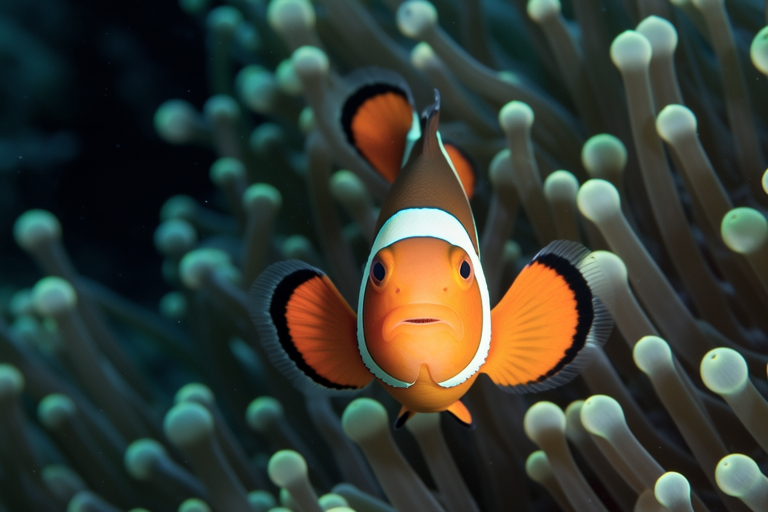
One of the most remarkable aspects of clownfish behavior is their symbiotic relationship with sea anemones. This partnership is mutually beneficial, with both species relying on each other for survival. Clownfish are immune to the stinging cells of sea anemones, allowing them to safely inhabit the anemone’s tentacles. In return, clownfish provide protection against predators and help to keep the anemone clean by consuming parasites and dead tissue.
The relationship between clownfish and sea anemones is a classic example of mutualism in nature. Clownfish deter potential threats such as butterfly fish, which would otherwise consume the anemone’s tentacles. Additionally, clownfish may attract prey for the anemone by swimming around it, stirring up the water and drawing small fish and plankton towards the anemone’s tentacles.
Social Structures and Communication
Clownfish live in groups within a single anemone, typically consisting of a dominant breeding pair and several non-breeding, younger fish. This hierarchical structure ensures that the largest and most aggressive fish becomes the dominant male, while the female remains the largest member of the group. If the dominant female dies, the dominant male will change sex and become the new female, ensuring the continuation of the breeding pair.
Communication among clownfish is primarily achieved through visual signals and body movements. These fish are known for their bold coloration, which serves as a warning to potential predators. However, within their own group, clownfish use more subtle cues to establish dominance and maintain social cohesion. They may swim in synchronized patterns or display specific postures to convey messages to one another.
Reproduction and Parenting Behaviors
Clownfish reproduction is a fascinating process that showcases their dedication to their offspring. Breeding pairs are monogamous and work together to care for their eggs. The female lays thousands of eggs on a flat surface near the anemone, typically during the full moon phase. The male then fertilizes the eggs and guards them until they hatch, usually after six to seven days.
Parental care does not end once the eggs hatch. The newly hatched larvae are carried by ocean currents, eventually settling in a suitable location to begin their adult lives. Throughout this period, both parents remain vigilant, defending their territory and ensuring the safety of their offspring. This level of parental investment is rare in the animal kingdom and highlights the complex social structures and behaviors of clownfish.
Conservation Efforts
Despite their popularity and charm, clownfish face numerous threats in the wild. Habitat destruction, overfishing, and climate change pose significant risks to their survival. Coral reefs are particularly vulnerable to rising sea temperatures, which can lead to coral bleaching and the loss of vital habitats. As clownfish rely heavily on these ecosystems, the decline of coral reefs directly impacts their populations.
Conservation efforts are underway to protect clownfish and their habitats. Marine protected areas (MPAs) have been established in various parts of the world to safeguard critical reef ecosystems. These protected zones restrict fishing activities and promote sustainable practices, helping to preserve the biodiversity of the oceans. Additionally, public awareness campaigns aim to educate people about the importance of marine conservation and encourage responsible tourism.
By supporting conservation initiatives and adopting eco-friendly practices, we can help ensure the survival of clownfish and their habitats. It is crucial to recognize the value of these real-life treasures and work towards preserving them for future generations. Whether through direct action or simply raising awareness, every effort counts in the fight to protect our oceans and the incredible creatures that call them home.
