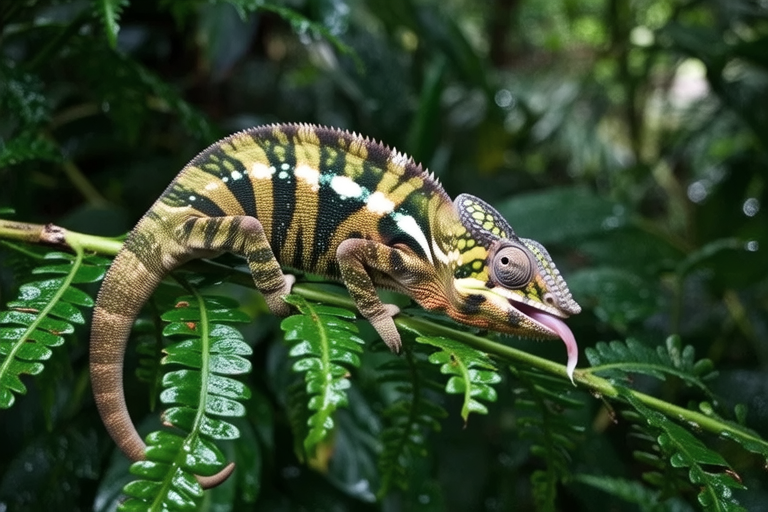
The Hidden World of Chameleons
Chameleons are one of the most fascinating creatures on Earth, known for their unique physical adaptations and mysterious behaviors. These reptiles have captured the imagination of people worldwide, often depicted in popular culture as enigmatic beings with the ability to change their skin color at will. In this article, we delve into the world of chameleons, exploring their habitats, diets, communication methods, and the science behind their remarkable color-changing abilities. We also discuss their solitary nature, hunting techniques, and how they adapt to various environments. Additionally, we examine recent studies and conservation efforts aimed at protecting these incredible animals.
Habitat and Adaptation
Chameleons inhabit diverse environments across Africa, Madagascar, southern Europe, and Asia. They prefer warm, humid climates and can be found in tropical forests, savannas, and even deserts. Their habitats range from dense rainforests to arid regions, where they have adapted to survive in challenging conditions. One of the key adaptations that enable chameleons to thrive in such varied environments is their prehensile tail, which acts like a fifth limb, allowing them to grip branches and move through trees with ease. This adaptation is particularly useful in densely forested areas where climbing is essential for both mobility and protection.
Another crucial adaptation is their specialized feet, which feature two toes pointing inward and three pointing outward. This arrangement provides a strong grip on narrow branches and allows chameleons to move nimbly through their arboreal habitats. Additionally, their eyes can rotate independently, giving them a nearly 360-degree field of vision. This unique characteristic helps chameleons spot potential prey or predators while remaining relatively still, minimizing energy expenditure.
Diet and Hunting Techniques
Chameleons are primarily insectivorous, feeding on a variety of insects such as crickets, grasshoppers, and locusts. Some larger species may also consume small birds, lizards, and even other chameleons. Their long, sticky tongues, which can extend up to twice their body length, are perfectly suited for catching fast-moving prey. The tongue’s rapid extension is powered by muscles and elastic tissues, allowing it to shoot out at speeds exceeding 20 kilometers per hour. Once the tongue makes contact with prey, a specialized tip adheres to the victim, pulling it back into the chameleon’s mouth.
In addition to their tongues, chameleons employ several other hunting techniques. They rely heavily on their keen eyesight and ability to remain motionless for extended periods, waiting patiently for unsuspecting prey to come within striking distance. Their color-changing abilities also play a role in hunting, as some species use patterns and colors to blend in with their surroundings, making it easier to ambush prey.
Communication and Color-Changing Abilities
One of the most captivating aspects of chameleons is their ability to change color. Contrary to popular belief, chameleons don’t change color solely to match their surroundings but rather to communicate with other chameleons or regulate their body temperature. The process involves specialized cells called chromatophores, which contain pigments responsible for color changes. By expanding or contracting these cells, chameleons can display a wide range of colors, including greens, blues, reds, and yellows.
Recent research has revealed that chameleons use their color-changing abilities to convey complex messages. For example, males may display vibrant colors during courtship rituals or territorial disputes, while females may signal their readiness to mate or rejection of a suitor. Moreover, scientists have discovered that chameleons can produce iridescent colors, which are not dependent on pigments but result from the interaction of light with microscopic structures in their skin. This phenomenon, known as structural coloration, allows chameleons to create vivid, shimmering hues that are highly visible to other chameleons.
Solitary Nature and Conservation Challenges
Chameleons are generally solitary creatures, preferring to live alone except during mating season. Their secretive nature contributes to their mystique and makes them difficult to study in the wild. However, this solitary lifestyle also poses challenges for conservation efforts, as it complicates population estimates and monitoring programs.
Despite their adaptability, many chameleon species face significant threats in the wild. Habitat destruction, illegal pet trade, and climate change are among the primary factors contributing to declining chameleon populations. Deforestation, agricultural expansion, and urbanization have led to the loss of vast tracts of suitable habitat, forcing chameleons into smaller, fragmented areas. The illegal pet trade exacerbates the problem, as collectors often capture wild chameleons for the exotic pet market, further depleting already vulnerable populations.
To address these challenges, numerous conservation initiatives have been launched. Organizations such as the International Union for Conservation of Nature (IUCN) and local wildlife groups work tirelessly to protect chameleon habitats and raise awareness about the importance of preserving these unique creatures. Efforts include habitat restoration projects, captive breeding programs, and educational campaigns aimed at reducing demand for wild-caught chameleons. Additionally, recent studies have focused on understanding chameleon behavior and ecology to develop more effective conservation strategies.
Recent Studies and Insights
Recent research has shed new light on chameleon behavior and physiology. Scientists have discovered that chameleons possess an extraordinary ability to control the flow of blood through their skin, enabling them to change color rapidly. This mechanism, known as vasodilation and vasoconstriction, allows chameleons to alter their appearance without relying solely on chromatophores. By regulating blood flow, chameleons can produce subtle variations in color, enhancing their ability to communicate and adapt to environmental changes.
Another exciting finding is the discovery of previously unknown chameleon species. In 2012, researchers identified four new species of chameleons in northern Madagascar, bringing the total number of recognized chameleon species to over 200. These newly discovered species offer valuable insights into chameleon evolution and diversification, highlighting the rich biodiversity of Madagascar and the importance of continued exploration and conservation efforts.
Conclusion
Chameleons are truly remarkable creatures, boasting a host of unique characteristics and behaviors that make them stand out in the animal kingdom. From their color-changing abilities to their specialized hunting techniques, chameleons have evolved to become highly efficient and adaptable predators. Despite their resilience, many chameleon species face significant challenges in the wild, and ongoing conservation efforts are crucial to ensuring their survival. By raising awareness about the plight of chameleons and supporting conservation initiatives, we can help protect these enigmatic creatures and preserve their place in our world.
