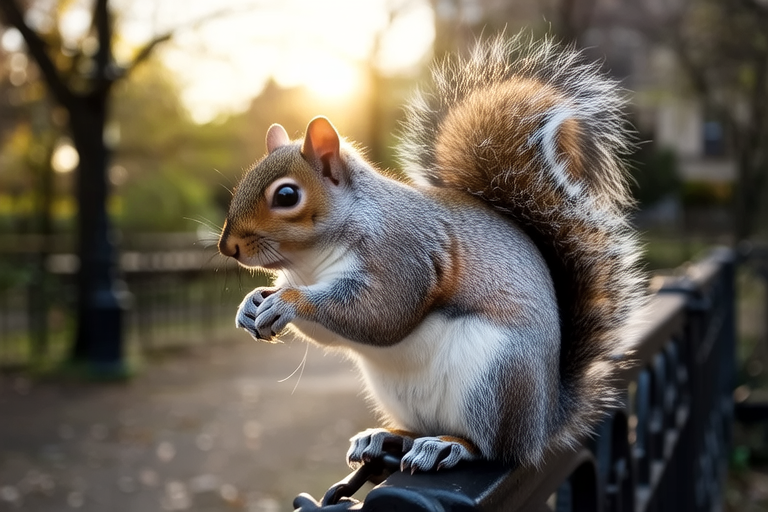
The Ingenious Squirrels of Urban Environments
Amidst the hustle and bustle of city life, one small but mighty creature has found its niche: the squirrel. These agile rodents, often seen scampering up trees or dashing across streets, have adapted remarkably well to urban environments. Their ability to thrive in these human-altered landscapes showcases their remarkable intelligence, adaptability, and resilience. Let’s delve into the fascinating world of urban squirrels, exploring their daily routines, survival strategies, interactions with humans, and their significant role in city ecosystems.
Daily Routines and Survival Strategies
In cities, squirrels follow a structured daily routine that revolves around finding food, avoiding predators, and maintaining territories. They are most active during daylight hours, particularly early mornings and late afternoons when traffic is lighter. Their primary diet consists of nuts, seeds, fruits, and occasionally insects. However, urban environments offer a diverse range of food sources, from bird feeders and gardens to discarded food scraps. This variety allows them to adjust their diets seasonally, ensuring a steady supply of nutrients throughout the year.
Survival in cities requires more than just finding food; it demands evading dangers. Squirrels are adept at navigating complex urban landscapes, utilizing rooftops, power lines, and fences to traverse safely. Their keen senses, including sharp eyesight and hearing, help them detect potential threats such as predators or approaching vehicles. In addition to these physical adaptations, squirrels exhibit behavioral changes that enhance their safety. For instance, they may avoid open spaces or cross roads only when necessary, reducing their exposure to risks.
Interactions with Humans
Squirrels have established a unique relationship with humans in urban areas. While some people view them as pests due to their occasional raids on bird feeders or gardens, others admire their playful antics and consider them charming companions. This mixed perception reflects the complex nature of human-squirrel interactions. Despite occasional conflicts over resources, many urban dwellers enjoy watching squirrels and even participate in feeding them. Some individuals go as far as setting up special feeding stations or providing nesting boxes to support local squirrel populations.
One notable aspect of human-squirrel interactions is the level of trust that can develop between them. Certain squirrels become accustomed to regular human presence and may approach people for food or simply out of curiosity. This bond highlights the adaptability of both species and demonstrates how urban environments can foster positive relationships between wildlife and residents.
Unique Problem-Solving Skills
Squirrels possess impressive problem-solving abilities that enable them to overcome obstacles in urban settings. One famous example is their knack for opening complex mechanisms, such as sliding glass doors or tightly sealed containers, to access food inside. Their intelligence extends beyond mere curiosity; they demonstrate strategic thinking by remembering locations of hidden caches and devising innovative ways to retrieve them. This mental agility underscores the cognitive capabilities of these seemingly simple creatures.
Research has shown that squirrels engage in caching behavior – storing food for future consumption – which involves intricate planning and memory recall. They often hide multiple caches in different locations, sometimes revisiting previously stored items if conditions change. This sophisticated approach to resource management illustrates the depth of their cognitive processes and emphasizes their importance within urban ecosystems.
Diet Adaptations and Nesting Habits
Urban squirrels have adapted their diets to include a wide array of plant-based foods available in cities, such as acorns, walnuts, pine cones, and various fruits. Their omnivorous nature allows them to exploit diverse food sources, from backyard gardens to public parks. Additionally, they consume human-provided snacks like bread crumbs, peanuts, and other treats left intentionally or accidentally. This flexibility ensures a stable food supply year-round, even during periods when natural resources may be scarce.
Nesting habits also reflect the adaptability of urban squirrels. They construct nests called dreys using leaves, twigs, and other materials found in their environment. These cozy structures provide shelter from harsh weather conditions and protect young squirrels until they are old enough to venture outside. Dreys can be built high up in trees or on man-made structures like balconies or eaves, offering additional protection against ground-dwelling predators. The ability to create safe havens in various locations demonstrates the versatility of squirrels in adapting to urban living.
Communication Methods
Effective communication plays a crucial role in the social dynamics of squirrel communities. These animals use a combination of vocalizations, body language, and scent marking to convey messages to one another. Alarm calls, for example, alert fellow squirrels about nearby threats, allowing them to take evasive action promptly. Tail flicking serves as another form of non-verbal communication, signaling agitation or warning potential intruders. Scent marking helps establish territorial boundaries and identify individual squirrels within groups.
While much research has focused on visual cues and vocalizations, recent studies suggest that squirrels might also rely on olfactory signals for communication. This could explain why certain behaviors, such as scent marking, persist despite limited visual contact among individuals. Understanding these complex communication systems provides valuable insights into the social structure and interactions within urban squirrel populations.
Role in Urban Ecosystems
Despite their small size, squirrels play vital roles in maintaining ecological balance within urban ecosystems. As seed dispersers, they contribute significantly to plant regeneration by burying seeds in various locations throughout the city. This process aids in the distribution of native flora, promoting biodiversity and enhancing green spaces. Moreover, their scavenging activities help control insect populations, acting as natural pest controllers. By consuming fallen fruit and other organic matter, they also assist in nutrient cycling, enriching soil quality.
The presence of squirrels in urban areas fosters a sense of connection between residents and nature. Observing these charismatic creatures can inspire appreciation for wildlife and encourage responsible stewardship of shared habitats. Furthermore, the positive impact of squirrels on urban ecosystems underscores the importance of preserving green spaces and creating environments conducive to wildlife coexistence.
Challenges and Conservation Efforts
Despite their remarkable adaptability, urban squirrels face numerous challenges that threaten their survival. Habitat fragmentation, caused by increasing urban development, reduces available space for nesting and foraging. This leads to intensified competition for resources among squirrels, potentially resulting in reduced population sizes. Additionally, exposure to pollutants and toxins poses health risks to these animals, affecting their reproductive success and overall wellbeing.
To address these issues, various conservation initiatives have been implemented in urban areas. City planners incorporate green infrastructure projects, such as rooftop gardens and green roofs, to provide additional habitats for squirrels. Public awareness campaigns educate residents about the benefits of coexisting with wildlife and promote responsible practices like proper waste disposal and minimizing pesticide use. Collaborative efforts between researchers, conservationists, and community members aim to ensure the long-term sustainability of urban squirrel populations while fostering harmonious relationships between humans and nature.
In conclusion, urban squirrels exemplify the extraordinary capacity of wildlife to thrive in human-altered landscapes. Through their daily routines, survival strategies, interactions with humans, problem-solving skills, diet adaptations, nesting habits, and communication methods, they showcase remarkable intelligence and agility. Their role in urban ecosystems highlights the interconnectedness of all living beings and underscores the importance of preserving green spaces for the benefit of both wildlife and human inhabitants. By understanding and appreciating these fascinating creatures, we can work towards creating more sustainable and harmonious cities where humans and nature coexist peacefully.
